 CH
CH PL
PL
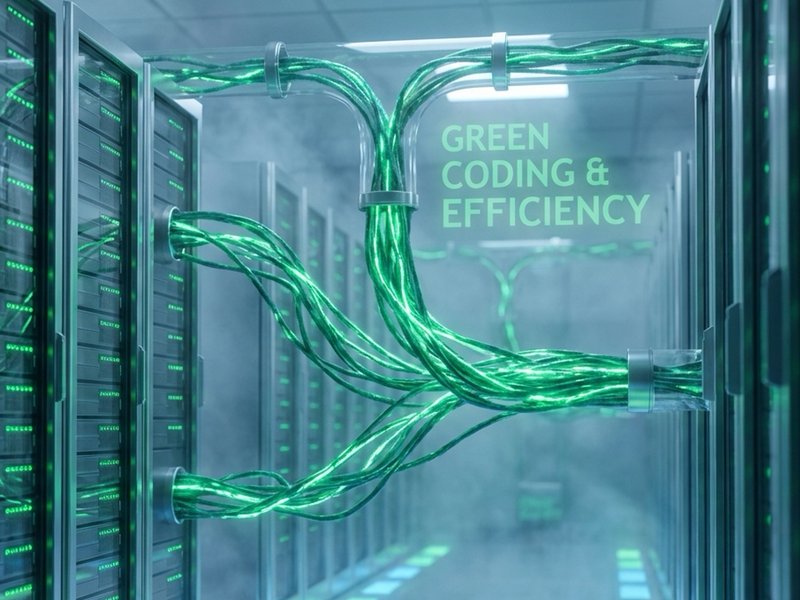
The Cloud Bill Doesn't Lie
Many companies migrated to the Cloud promising flexibility, only to face exploding costs. Why? Because poorly optimized code demands more computing power (CPU cycles) and memory. Running an application with "spaghetti code" is like driving a car with the handbrake on. You burn three times more fuel (electricity) to travel the same distance.
Your equation for 2026:Bad Code = High Energy Consumption = Massive Cloud Bills + Poor ESG Rating.
Turning Digital Waste into Profit
Code optimization isn't just a cleanup; it's a strategic overhaul. What do Green Coding experts actually do?
- Eliminate Redundancy: They identify algorithms performing unnecessary actions (like redundant database queries) and rewrite them for speed.
- Technology Shift: Switching from heavy Legacy frameworks to modern, lightweight languages (like Rust or Go) can cut server memory usage in half.
- Architectural Diet: Efficient scaling ensures you only pay for the compute power you actually use, rather than keeping idle servers running 24/7.
Green IT Is Not Just PR
It’s not just about saving the planet (though that helps your brand). It is about profitability. Software efficiency is the fastest lever to reduce Operating Expenses (OPEX). Every kilowatt your server doesn't eat goes straight to your bottom line.
Sustainability and profitability are no longer opposites. Clean code is hard cash. Suppliance connects you with the architects and engineers who can audit your systems and turn digital bloat into efficiency.